Website Notes · July 10, 2026
Build Around the Business, Not the Template
A lot of small-business websites look finished but still do not work. The logo is in place, the colors are chosen, the homepage has sections, and the contact form exists. But visitors still leave without understanding what the business does or why they should reach out.
That usually happens when the site was built around a template instead of the business.
A template can be useful as a starting point, but it cannot know your services, your customers, your pricing logic, your images, your sales process, or the questions people ask before they trust you. When the design comes first and the business gets squeezed in afterward, the website may look presentable while still saying the wrong thing.
At FultonStudio, we look at a website as a business presentation system. Design matters, but the structure has to come from the way the business actually works. That is why our website process starts with clarity before design.
A template does not understand your business
Most templates are designed for a generic company. They include a hero section, a few cards, an about block, testimonials, and a contact area. That can look clean, but it often creates a false sense of completion.
The real questions are deeper:
- What does this business actually sell?
- Who is the visitor, and what do they need to understand first?
- What makes the business credible?
- What images, examples, or proof help the visitor trust it?
- What should happen after someone reaches the page?
A strong website answers those questions with page structure, content, images, calls to action, and clean design. A weak website hides those answers inside a layout that was never built for them.
Start with the customer path
Before choosing the look of a website, a business needs to know the path a visitor should follow. A person landing on a site is usually trying to answer a few basic questions: Am I in the right place? Do they do what I need? Can I trust them? What should I do next?
That path should guide the homepage, navigation, service pages, portfolio sections, forms, and calls to action. If the site needs a deeper rethink, it may need more than a visual refresh. That is why we separate a design update from a full website restructure.
For example, a photographer, a consultant, a wellness studio, a fashion brand, and a contractor should not all have the same website structure. Some need image-driven proof. Some need detailed service explanations. Some need booking, payment, product pages, or inquiry forms. Some need a custom backend so staff can manage content without breaking the site.
The right structure depends on the business model, not the trendiest layout.
Content comes before decoration
One of the biggest reasons websites stall is that the business owner does not have the content ready. The designer waits for copy. The developer waits for images. The client sends old photos, unclear service descriptions, and a logo that does not match the direction of the business.
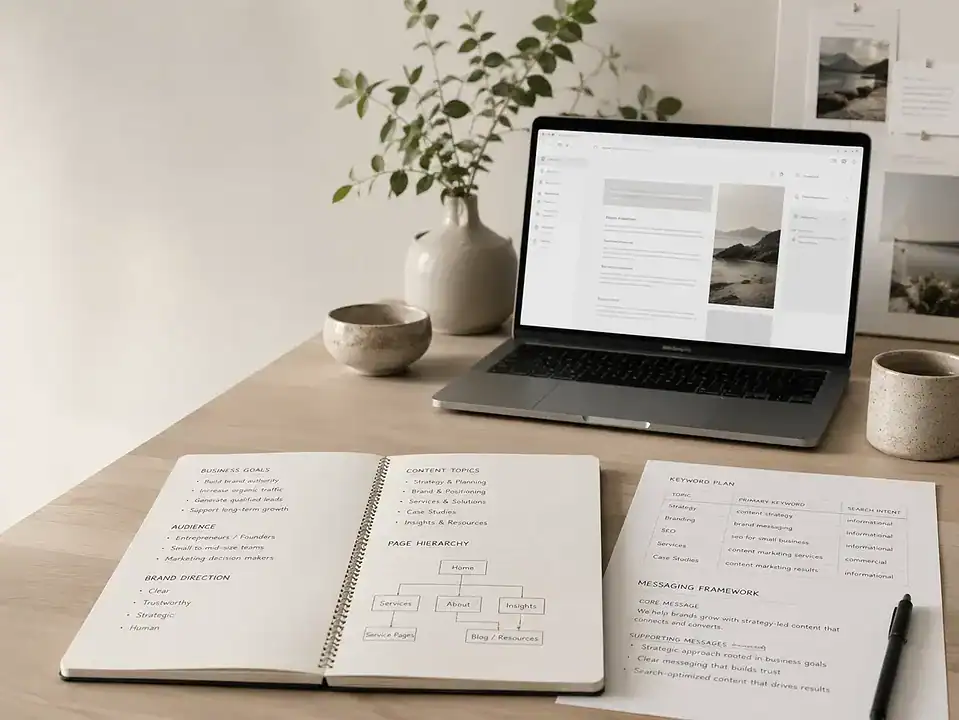
That is why FultonStudio treats content as part of the build, not an afterthought. We help organize the message, service descriptions, photography, image direction, calls to action, SEO titles, and page flow. A website should not just hold content; it should clarify it.
When a business already has strong photography, we shape the site around it. When the images are weak, outdated, or inconsistent, we can create new brand, product, portrait, editorial, or commercial photography through Ken Jones Photography. That is a major difference between a site that simply looks arranged and a site that feels intentional.
Design should support the business goal
A beautiful website still fails if it does not help visitors take action. Good design is not decoration. It controls attention.
It decides what visitors see first, where their eyes go next, how services are grouped, how proof is presented, and how easy it is to make contact. Typography, spacing, photography, color, buttons, and page sections should work together to make the business easier to understand.
This is where custom website design matters. Custom does not always mean complicated or expensive. It means the site is planned around the business, not forced into a shape that does not fit.
When a template is not enough
A template can work for a very simple site with a basic brochure purpose. But many growing businesses need more than that. They may need custom WordPress sections, WooCommerce, booking flows, lead forms, service estimate tools, client dashboards, QR code workflows, or content systems that make the site easier to manage.
That is where design and development need to work together. A site should look polished on the front end, but it should also support the business behind the scenes. If the project needs custom tools, content controls, or smarter forms, it should be planned into the build early instead of patched on later.
The better approach
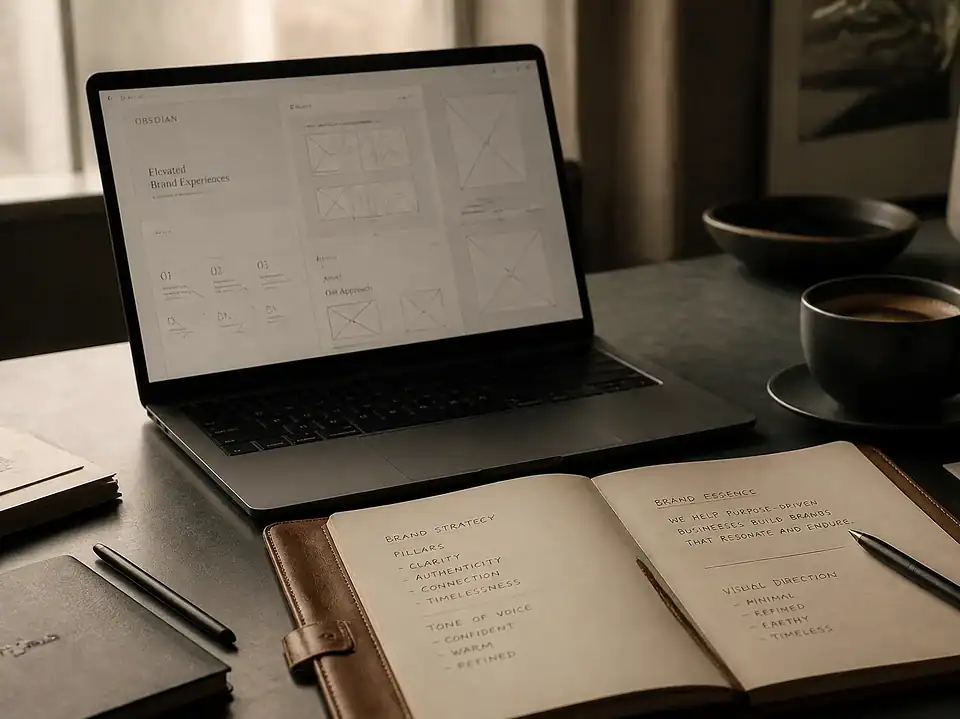
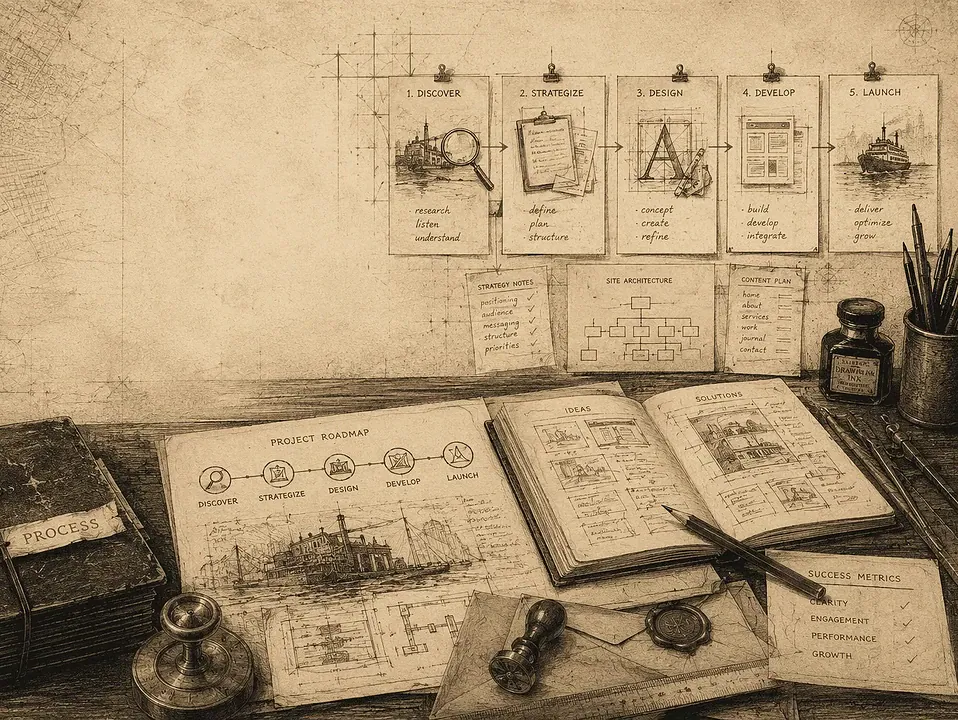
A better website process starts with strategy, then content, then design, then development. The order matters.
First, clarify the business. Then map the customer journey. Then organize the services and content. Then choose the visual direction. Then build the site and tools around what the business actually needs.
That is how a website becomes more than a nice layout. It becomes a clearer way for people to understand what you do, trust your work, and take the next step.
If your website looks fine but still does not explain your business clearly, the problem may not be the design alone. The site may need to be rebuilt around the business itself.
How FultonStudio can help
FultonStudio helps small businesses, creative brands, and professional service providers plan, design, rebuild, and improve websites around their real services, content, visuals, and customer flow. We combine web design, website and CMS development, branding, photography, copy structure, SEO-friendly page planning, and practical digital tools so the finished site feels clear instead of forced.
If your site was built around a template and no longer fits the business, start with a website review or send a project request so we can look at what needs to be clarified first.