Website Notes · July 10, 2026
How to Plan a Small Business Website Structure
A small-business website does not need to be complicated. It needs to be clear.
The structure of the site should help visitors understand what the business does, why it matters, who it serves, what proof exists, and how to take the next step. When the structure is weak, even good design and strong photography can feel confusing.
Good structure starts before the design. It starts with the business, the visitor, the content, and the action you want people to take.
Start with what the visitor needs to know
Most visitors come to a website with questions. They may not say them out loud, but they are thinking through them quickly.
They want to know:
- What does this business do?
- Is this for someone like me?
- Can I trust this company?
- What does the service include?
- What does it look like?
- What does it cost or how do I start?
- How do I contact them?
Your website structure should answer those questions in a natural order. If the visitor has to hunt for basic information, the site is working too hard against them.
The core pages most businesses need
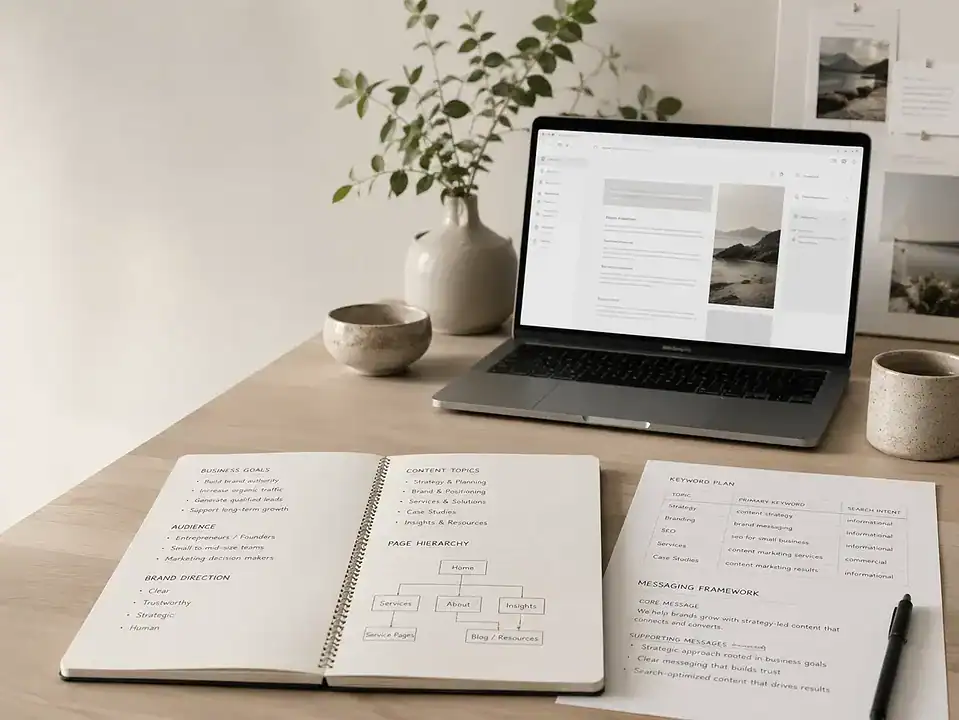
Most small businesses need a clear group of core pages:
- Homepage
- Services or individual service pages
- About page
- Portfolio, work, gallery, or case studies
- Pricing or starting-point guidance when appropriate
- Contact or request page
- Blog, journal, or resource section if content marketing matters
The exact structure depends on the business. A creative studio, gallery, consultant, fashion brand, photographer, and service provider should not all use the same page map.
The point is not to add more pages. The point is to give each important part of the business a proper place.
Service pages deserve more attention
A common mistake is putting every service into one short list. That may be easy to build, but it is not always useful for visitors or search engines.
If a service is important, profitable, searched for, or complex, it likely deserves its own page. A dedicated page gives the business room to explain the problem, process, examples, FAQs, visuals, and next step.
This is especially important for web design, branding, photography, studio rentals, e-commerce, and custom development because visitors need different proof for each offer.
If you are unsure what belongs on those pages, start with a clear service page structure.
Think in sections, not just pages
A page is built from sections. Each section should have a job.
A homepage might include:
- A clear opening message
- A short explanation of what the business does
- Main service areas
- Proof or examples
- A process overview
- Photography or portfolio highlights
- A call to action
A service page might include:
- The problem the visitor has
- What the service includes
- Who it is for
- Visual examples
- Process steps
- FAQs
- A contact or request form
When sections are planned before design, the page feels more intentional and less like a template being filled in.
Plan the content before the build
Content delays are one of the most common reasons website projects slow down. A business may know what it does, but still struggle to write service descriptions, choose images, organize portfolio examples, or explain the process clearly.
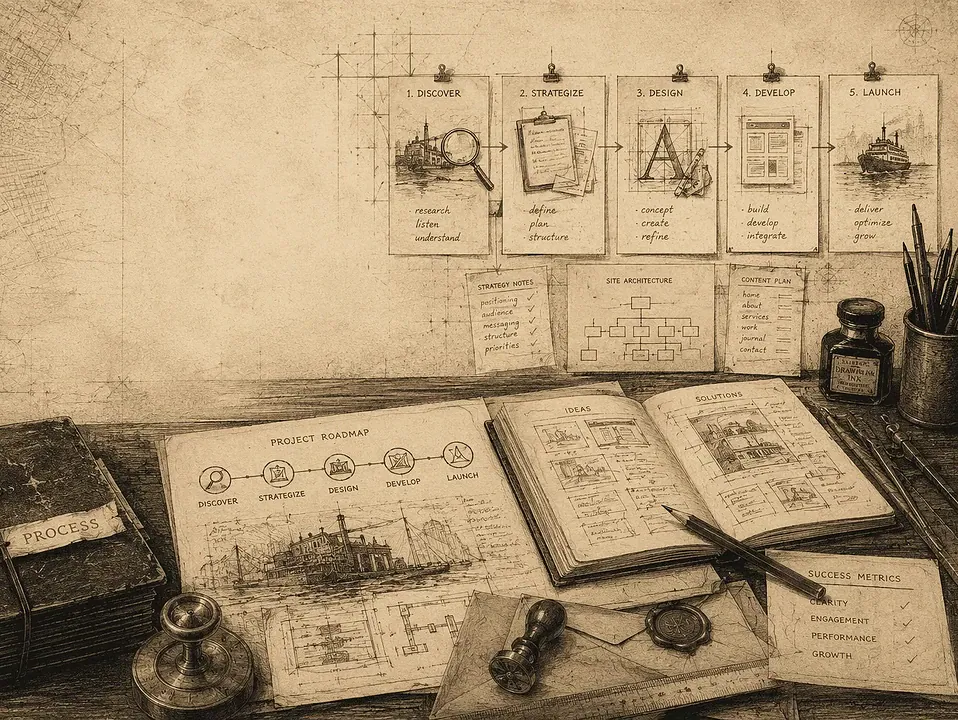
FultonStudio treats content as part of the website process. We help gather, shape, and organize copy, photography, visual direction, calls to action, SEO titles, and page flow. The site should be built from the content outward, not filled with placeholder text until the end.
This is also where photography matters. Strong images can make a site feel real and credible. Weak or inconsistent images can make the same business feel unfinished.
Build for search without sounding robotic
SEO-friendly structure does not mean stuffing keywords into every sentence. It means giving each page a clear topic, useful headings, accurate titles, descriptive copy, good internal links, and content that answers real visitor questions.
Search engines need to understand the page. So do people.
A small-business site should use plain language, clear service names, strong headings, and helpful supporting content. The goal is not to sound like an SEO article. The goal is to make the site easier to find and easier to use.
Internal links also matter. A helpful article should point visitors toward related service pages, the process, relevant case studies, and a clear contact path.
Keep the navigation obvious
Navigation should not be clever at the expense of clarity. Visitors should know where to click.
Use simple labels when possible: Services, Work, About, Process, Pricing, Contact. If the site has multiple audiences or service lines, the navigation may need a more thoughtful structure, but it should still feel obvious.
The best navigation supports the business without making visitors think too hard.
How FultonStudio can help
FultonStudio helps small businesses and creative brands plan websites around real structure, not just visual layout. We map pages, organize services, shape content, plan photography, create SEO-friendly sections, design the interface, and build WordPress systems that are easier to manage.
If your website feels scattered or hard to plan, start with a website review or send a project request so we can help turn the pieces into a workable structure.