Website Notes · May 26, 2026
Redesign vs. Restructure: What Your Site Needs
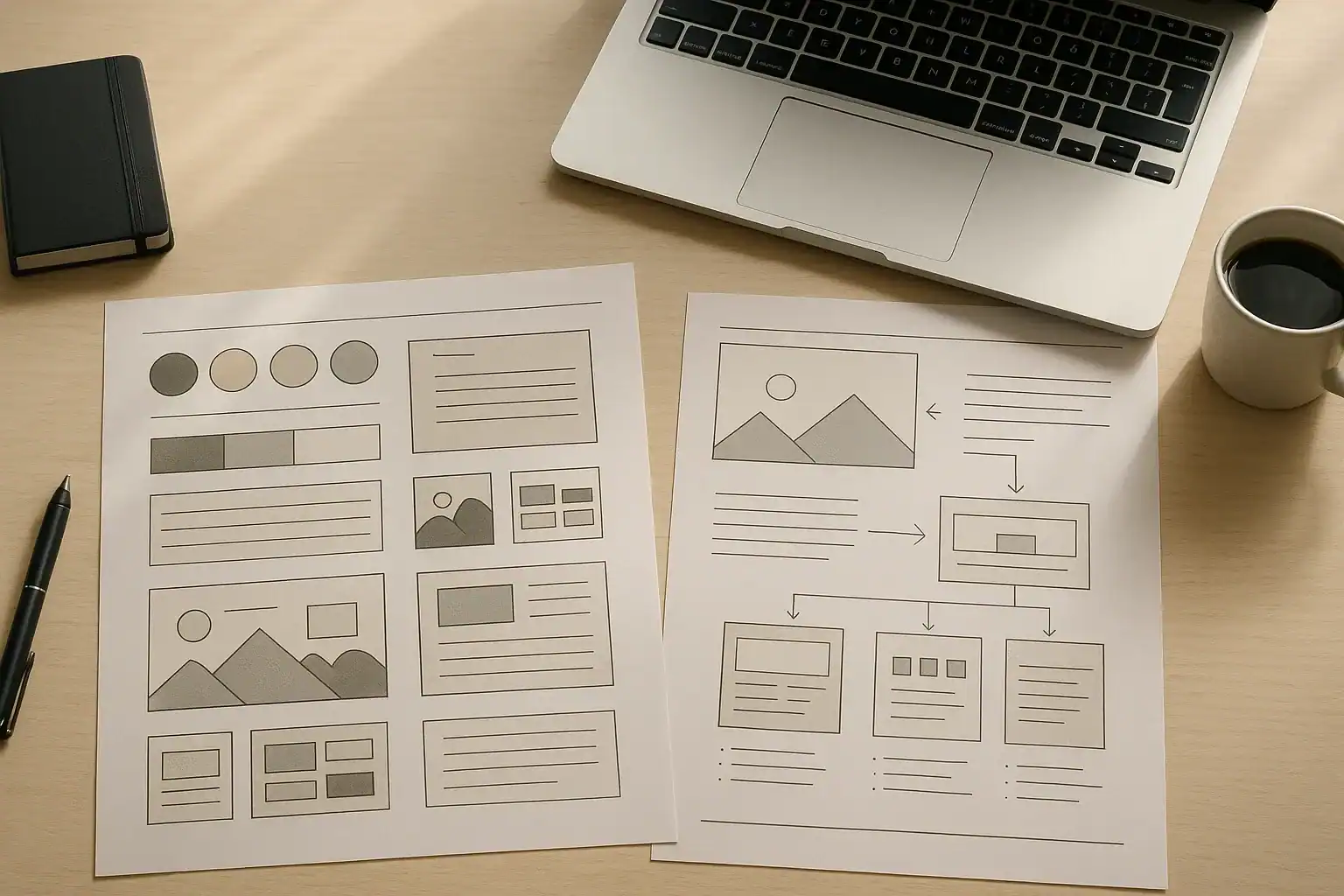
Most business owners reach a point where the website feels wrong. Leads are not coming in. Visitors leave quickly. The copy sounds off. The pages do not explain what the business actually does.
The instinct is usually the same: redesign it. New colors, new fonts, a fresher layout. Sometimes that is exactly the right call. But often the real problem is not how the site looks. It is how the site is built, organized, and written. That is a restructure, and it is a different kind of work.
Knowing which one you need will save you time, budget, and a lot of frustration.
What a Redesign Actually Does
A redesign is visual. It changes the appearance of your site without necessarily changing the underlying logic.
New typography, updated photography, a cleaner color palette, refreshed section layouts. These changes matter. A dated visual presentation can undermine trust before a visitor reads a single word. If your site was built in 2014 and still looks like it, a visual refresh is probably overdue.
But a redesign only solves visual problems. If your service pages are unclear, your navigation confuses people, your calls to action are buried, or your content does not rank in search, new colors will not fix any of that.
A redesign answers the question: does this site look the way it should?
What a Restructure Actually Does
A restructure works at a deeper level. It addresses how the site is organized, what it says, who it speaks to, and how it guides someone from curious visitor to ready client.
A restructure often includes:
- Rethinking the page hierarchy and navigation so visitors can find what they need
- Rewriting service pages so they explain clearly what you do and who it is for
- Adding or reorganizing content to reflect how clients actually search
- Cleaning up SEO signals including metadata, page titles, internal linking, and content gaps
- Repositioning calls to action so they appear at the right moments
- Clarifying the business message so it works across every page, not just the homepage
A restructure answers a harder set of questions: does this site explain the business clearly, does it serve the right audience, and does it do its job?
Signs You Need a Redesign
Some problems are genuinely visual. If most of your content is solid but the presentation is holding it back, a redesign is the right scope.
You probably need a redesign if:
- The visual style feels noticeably dated compared to your competitors
- Your brand has evolved but the site still reflects an older identity
- New photography, a refreshed logo, or updated brand colors need to be applied consistently
- Visitors understand what you do, but the site just does not look professional enough to support the ask
In this case, the structure and content can largely stay. The work is applying a visual system that matches where the brand is today.
Signs You Need a Restructure
This is where most businesses actually are, even when they think they just need a visual refresh.
You probably need a restructure if:
- Visitors land on the site and cannot quickly explain what you do or who you serve
- Your service pages are vague, thin, or written for an old version of the business
- You have multiple services but the site buries them or lumps them together
- Leads that come through are the wrong fit, or they ask basic questions the site should already answer
- The site does not appear in search results for the terms your clients would actually use
- You have added pages over time without a clear plan, and the navigation has become a mess
- Your homepage does a lot of talking but does not direct anyone anywhere useful
None of these are design problems. They are structure, content, and clarity problems. A new coat of paint will not fix them.
When You Need Both
A lot of businesses need both, and that is not a bad thing. It means the site has reached a genuine turning point.
The important distinction is sequence. Restructure first, then redesign. If you start with the visual work before the content and page logic are settled, you will likely redo it. Pages shift, sections get added, messaging changes, and the carefully crafted design ends up being rebuilt halfway through anyway.
FultonStudio approaches this the way the homepage describes: starting with the business, not a preset layout. The studio looks at what the company does, who it serves, what clients need to understand, and how the brand should appear before any design decisions are made. That process connects the message, website, content, SEO, and images into one system rather than treating each piece as a separate project.
For a look at how this plays out in practice, the Cables and Chips case study walks through a project that involved website restructuring, SEO cleanup, and local positioning, not just a visual update.
The SEO Piece Most People Miss
One of the clearest signs that a site needs a restructure rather than a redesign is invisible to most visitors: search performance.
If the site is not getting found, or if it is getting found for the wrong things, the problem is almost always in the content and page structure. Search engines read page titles, headers, content depth, internal linking, and service clarity. A visually beautiful site with thin or vague content will still underperform in search.
White hat SEO planning is built into the restructuring process at FultonStudio, not treated as a separate add-on. Service pages are written so they explain the business clearly to people and search engines at the same time. That means building real pages, with real content, organized the way your clients actually think about what they need.
Getting the Diagnosis Right Before Starting the Work
The biggest mistake in a site project is skipping the diagnostic step. Most studios jump to design. Most freelancers jump to building. The result is a site that looks different but performs the same.
Before deciding what your site needs, answer a few honest questions:
- Can a new visitor understand your core service within ten seconds of landing on the homepage?
- Do your service pages explain outcomes, or just list what you do?
- Is the site organized the way your clients think, or the way your internal team thinks?
- Are people finding the site through search, and is it the right kind of traffic?
- Does the site ask visitors to do something, and do they?
If most of your answers are unclear or negative, restructuring the site is the place to start. The visual work becomes much easier once the logic is right.
If you are unsure where your site stands, FultonStudio starts with the business before recommending anything. Reach out to the studio and start with a clearer picture of what is actually holding the site back.