Website Notes · August 1, 2026
How Much Does a Custom B2B Website Actually Cost? A Transparent Breakdown for 2026

Asking "how much does a website cost?" is like walking into a contractor’s office and asking, "how much does a house cost?"
Without knowing if you need a two-bedroom cabin or a commercial high-rise, any number you get is a guess.
In the B2B space, leadership teams often approach web design as a line-item expense rather than an operational asset. They want a quote immediately. They compare a $3,000 template to a $40,000 agency proposal and wonder why the gap is so wide.
Let’s pull back the curtain. Here is a realistic, transparent breakdown of what goes into a professional B2B website in 2026, where the money actually goes, and why the cheapest option is almost always the most expensive mistake you can make.
Why the Initial Quote is Only Part of the Story
When business owners evaluate website proposals, they tend to look exclusively at the build phase.
They see code and layout.
They miss strategy, information architecture, messaging, conversion pathways, and asset creation. A website isn't a digital brochure you print once and put on a shelf. It is the central hub of your entire commercial operation.
If your site fails to communicate your value within five seconds, potential clients leave. They do not email you to ask for clarification. They click back to Google and call your competitor.
The Transparent Breakdown: Where Your Investment Goes
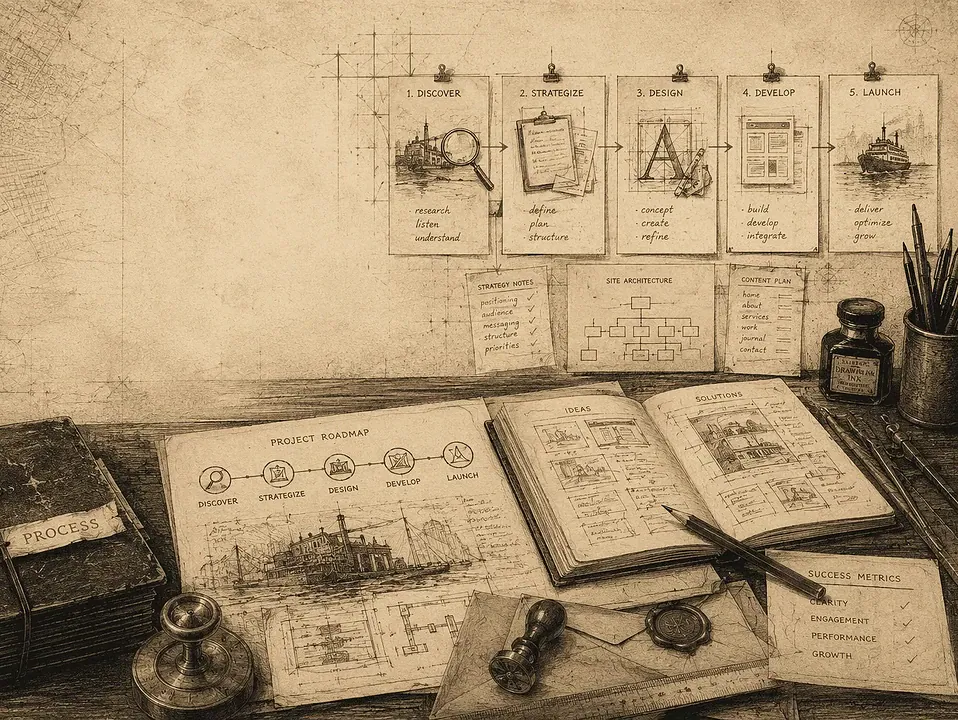
A professional B2B website built by a reputable custom web design agency requires a deliberate sequence of specialized disciplines. Here is how a serious project is typically allocated across key phases:
1. Strategy & Brand Positioning
Before a single pixel is moved on a screen, you need direction. Who is the buyer? What objections do they have? How do you differentiate from competitors?
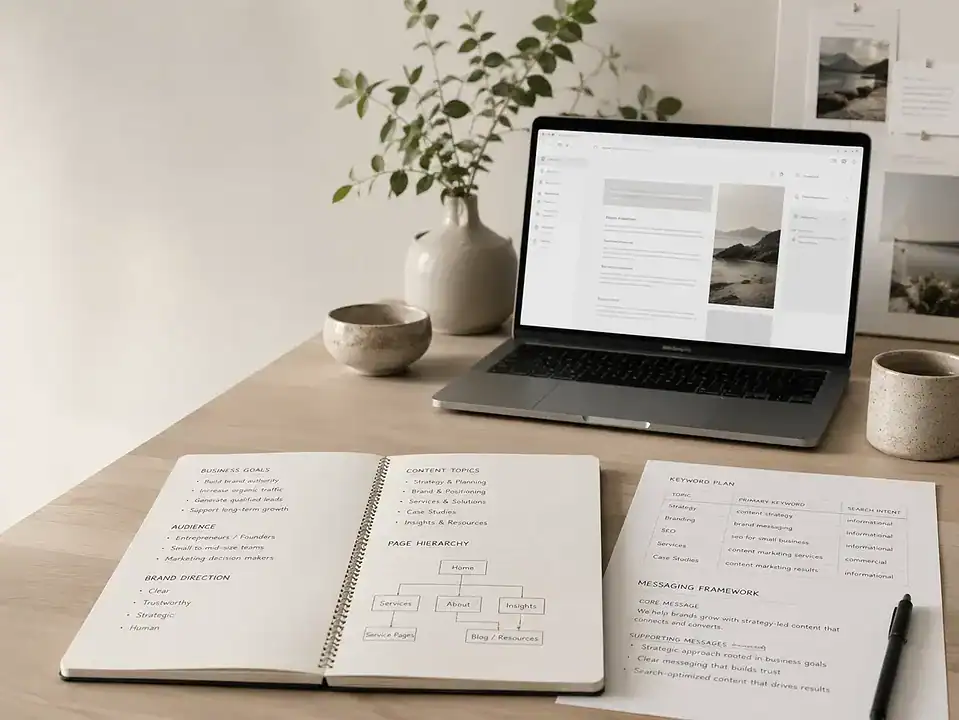
Partnering with a brand positioning agency ensures your site is anchored in a solid commercial foundation rather than personal aesthetic preferences. This phase defines your site structure, user journeys, and core value propositions.
2. Information Architecture & UX Wireframing
Good design is invisible. It guides the visitor effortlessly from curiosity to conversion. Wireframing maps out every page layout, navigation hierarchy, and user flow before design styling begins. This prevents costly structural changes halfway through development.
3. SEO Copywriting
Generic corporate jargon kills conversion rates. You need sharp, benefit-driven messaging that speaks directly to your ideal customer.
Effective SEO copywriting balances search engine visibility with human persuasion, ensuring every service page, case study, and resource answers the exact questions your buyers are searching for.
4. Custom Visual Production
Nothing screams "generic template" faster than stock photos of handshakes and glassy-eyed office workers pointing at laptops.
Investing in professional business photography and bespoke video assets changes the entire credibility of your brand. Real team members, real workspaces, and original product shots build instant trust with procurement officers and enterprise buyers.
5. Frontend & Backend Development
This is where design meets engineering. A clean build ensures lightning-fast load times, mobile responsiveness, bulletproof security, and an intuitive content management system (CMS) that your team can actually use without breaking the layout.
6. Quality Assurance & Launch
Rigorous testing across browsers, devices, and screen sizes ensures error-free performance before the site goes live.

The Hidden Costs of Going Cheap
It is entirely possible to get a website built for $1,500 on a crowdsourced platform, or launch an AI-generated site promoted heavily by online shortcuts.
Here is what those savings actually cost you:
- Stock Photo Fatigue: Your prospects have seen the same smiling models on twenty other supplier websites. It commoditizes your brand instantly.
- Disjointed Messaging: Without foundational strategy, your homepage talks about you instead of the client’s problem. Visitors bounce within seconds.
- Zero Organic Visibility: Sites built without proper technical architecture and keyword planning are invisible on search engines. You end up paying for every single visitor through expensive outbound ads.
- The Rebuild Cycle: Cheap sites break under growth. Within eighteen months, companies realize the site can't scale, doesn't integrate with their CRM, and requires a complete teardown.
Penny-wise and pound-foolish remains the default trap of digital budgeting.

The Traditional Agency Model vs. The Integrated Approach
Traditionally, companies hire a branding consultant, who hands off a PDF to a copywriter, who sends text to a freelance designer, who passes Photoshop files to an outside developer, who then scrambles to find stock imagery.
Communication breaks down. Timelines stretch. Budgets inflate with every handoff fee.
This friction is why integrated execution matters.
When you choose integrated brand and web development, strategy, design, copywriting, and visual production happen under one roof.
At FultonStudio, our multidisciplinary team handles everything from initial brand strategy to custom website dashboards and white-hat SEO planning. By combining strategic positioning with in-house image creation and photography, we eliminate agency silos, reduce overhead, and deliver a cohesive digital presence that is ready to perform from day one.

Realistic Investment Ranges for 2026
While exact figures depend on page count, e-commerce requirements, and complex integrations, here is how professional B2B website investments generally cluster in today's market:
- Early-Stage / Simple Brochure Site: Designed for early validation, straightforward messaging, and clean mobile responsiveness. Best for young firms establishing baseline credibility.
- Growth-Stage Lead Generation Engine: Built for mid-market B2B companies, professional services, and specialized manufacturers. Includes custom UX/IA, robust service pages, case study hubs, CRM integrations, and strategic content & SEO page writing.
- Enterprise & Complex Platforms: Multi-region, multi-audience architectures with advanced backend integrations, customer portals, and extensive custom development.
When evaluating these tiers, shift your mindset away from cost and toward return on investment.

The ROI Frame: Leads vs. Aesthetics
A website that "looks nice" is a digital painting. It hangs on the wall and gathers dust.
A custom B2B website is a commercial tool.
If your average client value is $20,000, and your new website successfully convinces just two additional enterprise prospects to close each year over its three-year lifespan, the site has generated $120,000 in new revenue.
Suddenly, investing properly in a strategic web partner isn't an expense. It’s the highest-yielding capital allocation your business will make this year.
Ready to build a digital presence that accurately reflects the caliber of your work? Explore our core services or get in touch with our team to discuss your next project.